How Often Should You Sharpen Kitchen Knives in Daphne, AL?
If you cook several nights a week, you’ve probably asked yourself how often kitchen knife sharpening really needs to happen. The short answer for most Daphne, AL homes is every 6–12 months, but the right schedule depends on how you cook, what you cut, and how you care for your blades between services.
Below, you’ll find a simple, local-first guide that explains what “sharp enough” means for home kitchens, the factors that speed up dulling on the Gulf Coast, and the clear signs it’s time to book kitchen knife sharpening. We’ll also show why honing isn’t the same as sharpening, so you know exactly how to keep your knives performing safely and predictably.
If you’re new to Sharpening Services of Alabama, we’re proud to support cooks from Lake Forest to Olde Towne Daphne and across Baldwin County. For broader tools and blades, our team also provides local tool sharpening in Daphne, so your kitchen and workshop stay ready for any project.
What “Sharp Enough” Really Means
In a home kitchen, “sharp enough” means your knife glides with light pressure, stays straight on the cut line, and doesn’t crush delicate foods. A sharp edge gives you control, which makes prep faster and more consistent.
Think about slicing a ripe tomato. With a sharp chef’s knife, the skin opens cleanly, and the blade tracks straight. With a dull edge, you need more force, the skin buckles, and slices tear. More force means less control, and it often leads to slips. Dull knives increase the chance of the blade sliding off food and into your fingers.
How Often Home Cooks Should Have Their Knives Sharpened
Most households in Daphne that cook three to five nights a week see the best results with professional sharpening every 6–12 months. If you cook daily, prep a lot of proteins, or batch-cook on weekends, plan on every 3–6 months. Occasional cooks can stretch to once a year if they hone correctly and store knives well.
Why the range? Knife steel type, cutting surfaces, and local humidity all influence how fast an edge breaks down. Stainless steels, common in home sets, hold up well but still fatigue with use. Harder premium steels keep an edge longer but can chip if mistreated, which also calls for periodic professional attention.
Factors That Change Your Sharpening Schedule
Consider these everyday variables when deciding how often to schedule service:
- Use frequency: Nightly cooking dulls faster than weekend-only prep.
- Cutting surface: Wood and quality plastic boards are gentler on edges than hard glass or stone.
- Food types: Proteins, root vegetables, and crusty bread wear edges faster than herbs or soft fruit.
- Storage: Loose drawers cause edge impacts. A block, magnetic strip, or edge guards protect the bevel.
- Care habits: Hand-washing and quick drying preserve edges better than dishwashers and soaking.
If two or more of these lean “hard on knives,” your sharpening interval should be on the shorter side.
Honing vs. Sharpening: Why Both Matter
Honing is quick edge alignment with a steel or ceramic rod. It straightens the microscopic edge that curls during use, restoring feel without removing much metal. Sharpening removes metal to create a fresh, precise bevel and apex. You need both over time.
Many home cooks hone before a big prep session and after washing, which keeps the edge feeling crisp between professional visits. Just remember, honing doesn’t replace sharpening. If the edge is rounded or chipped, only a true sharpening will restore performance.
Clear Signs Your Knives Need Professional Care
Not sure whether to book a service now or wait? Watch for these simple signals:
- Tomato skin or pepper skin crushes before slicing.
- Onion cuts push layers apart instead of tracking straight.
- Carrots feel “skatey,” and the tip wanders off the cut line.
- You need a noticeable force for basic prep that used to feel easy.
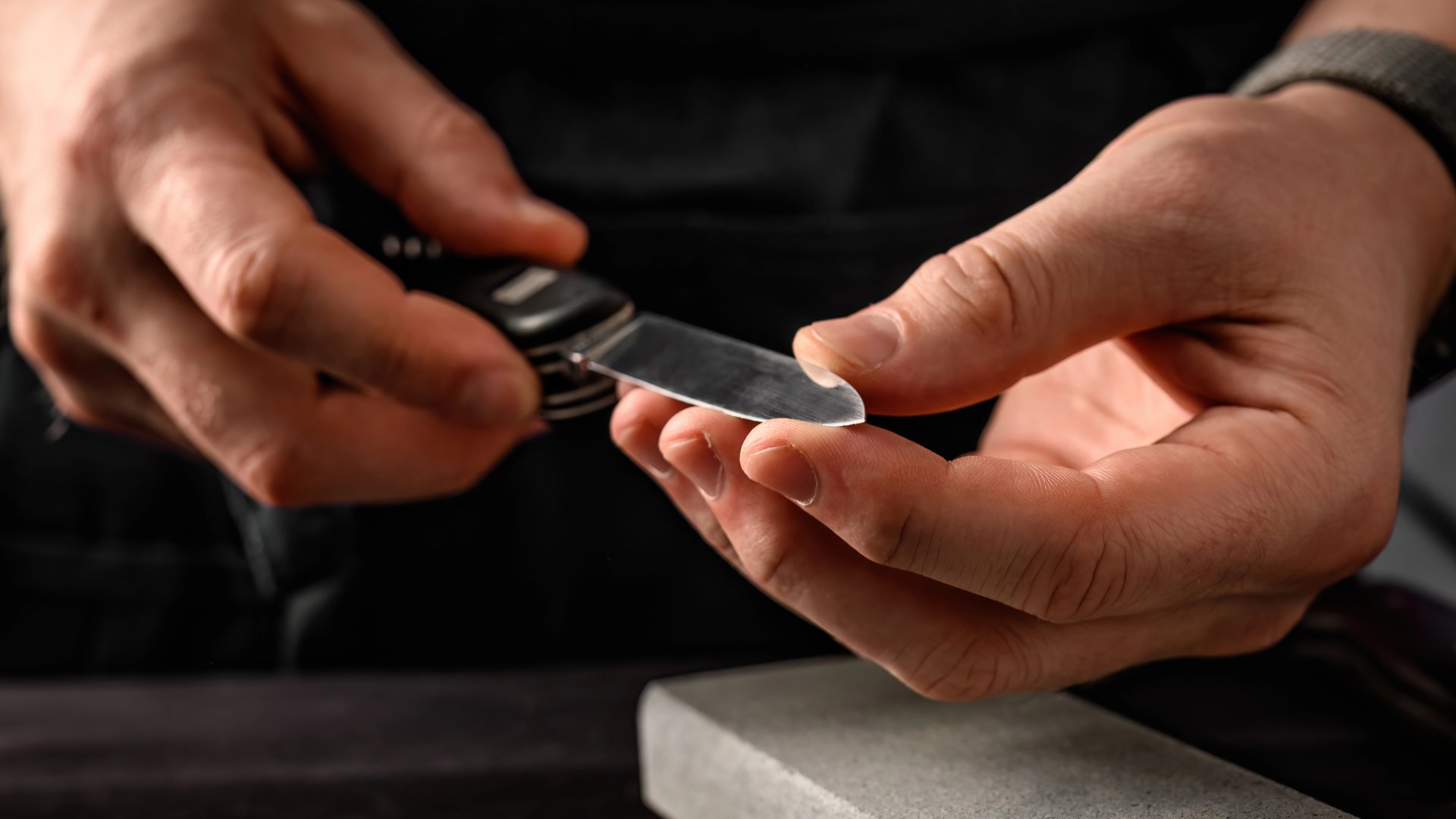
- Edges show microchips, bright flat spots, or feel toothy on your thumbnail.
If two or more show up in your daily cooking, it’s time for professional attention so your prep stays safe and predictable.
Seasonal Knife Care on the Gulf Coast
Daphne’s humid, salt-influenced air can accelerate corrosion and oxidation, especially in summer thunderstorms and during beach trips when gear picks up salt spray. Stainless steels resist rust, but they’re not immune, particularly along the cutting edge where metal is thinnest. That’s one reason many Baldwin County home cooks follow a spring-and-fall cadence that pairs with seasonal pantry restocks.
Coastal humidity and salt in the air can age a fine edge faster. Wipe knives dry immediately after washing and avoid leaving them to air-dry on the rack. A simple dry-and-store routine helps your sharpening last longer between appointments.
If you’re hosting holidays or crawfish boils, plan a touch-up a few weeks before big gatherings. You’ll reduce prep time and plate food that looks cleaner and more consistent, whether it’s tomato salads, gumbo trinity, or smoked meats.
A Simple Cadence That Works
Use this easy framework to set your schedule without overthinking it:
Quarterly for heavy home cooks: If you cook 5–7 nights a week, prep tough produce, and entertain often, a 3–4 month cadence keeps edges predictable while limiting metal removal over time.
Semiannual for steady home cooks: If you cook 3–5 nights weekly, aim for spring and fall sharpening. That rhythm pairs well with deep-cleaning and pantry resets, so it’s easy to remember.
Annual for light home cooks: If you cook once or twice a week and hone properly, once a year is usually fine. If you notice drag or tearing before the year mark, move to the semiannual plan.
Why Professional Sharpening Beats Quick Fixes
Fast gadgets promise a sharp edge, but they often grind at fixed, aggressive angles that remove more metal than needed and shorten a knife’s life. Professional sharpening sets the correct angle for your knife’s steel and purpose, restores a clean apex, and finishes with a consistent polish so the edge bites but doesn’t tear.
That precision matters for safety. A stable bevel helps the blade track straight through onions and across cutting boards. In a busy home kitchen, consistency beats raw sharpness, because predictable knives keep you in control during weeknight rushes.
The Local Context: Daphne Kitchens and Everyday Prep
From Lake Forest’s family kitchens to cozy setups near Village Point, home cooks in Daphne tackle a wide range of meals, often with produce that’s juicy and delicate. Tomatoes and citrus can reveal dullness fast, and our seafood-heavy meals demand clean cuts that don’t mash flesh or snag skin. When edges drift, prep slows, and portions look uneven.
That’s why many neighbors turn to Sharpening Services of Alabama for dependable professional knife sharpening at regular intervals. Once your knives settle into a rhythm, you’ll notice straighter cuts, less hand fatigue, and fewer surprises on the board.
Care Habits That Preserve Your Edge Between Services
Good habits make a big difference between scheduled sharpenings. Stick with wood or high-quality plastic boards, wash by hand, and dry immediately. Store knives in a block, on a magnetic strip, or with guards to prevent edge contact with hard surfaces.
If you like a quick tune-up before chopping, use a ceramic or steel hone with light, consistent strokes. Keep the angle steady and the pressure low. Over-honing can deform the apex, so be gentle and stop if the edge already feels crisp.
What About Specialty Knives?
Boning knives, santokus, paring knives, and serrated bread knives all degrade differently. High-use boning and chef’s knives benefit most from a frequent schedule. Santokus often see heavy vegetable prep, so they follow the chef’s knife cadence. Serrated knives are special cases and need careful professional service less often to maintain their scallops.
Got an heirloom or premium steel? Mention it when you call so we can tailor angles and finish to the blade’s purpose. That keeps performance high while preserving steel for the long run.
Safety and Comfort Go Hand in Hand
Sharp knives reduce the force you need to start a cut, which reduces slips. They also keep blade tips from walking off hard produce like carrots or squash. When prep is comfortable, you cook more often, waste less food, and get cleaner results that make meals feel restaurant-level at home.
When You’re Ready to Set Your Schedule
If you’d like a steady cadence, we can align sharpening to your calendar and text reminders when you’re due. Many families choose spring and fall dates, and heavy cooks prefer a 3–4 month rhythm. Either way, we’ll keep the process easy so your knives never fall behind.
Questions or ready to book? Call Sharpening Services of Alabama at 251-468-0254 and we’ll help you choose the right interval based on your kitchen, habits, and goals for cooking knife performance.
Ready To Love Your Knives Again?
Set your kitchen up for stress-free prep with predictable, safe edges that last. To get started on a cadence that fits your home in Daphne, schedule your next service through our page for convenient cooking knife sharpening today.
Prefer to talk it through first? Our team is happy to discuss your knives, from daily drivers to specialty blades, and map out a plan that keeps everything working smoothly.